
Is our Milk Party for you? An “outsider” perspective.

I [Morgan, Admin for Lactation Care with Elizabeth] attended my first Milk Party this month. It was such a joy to see moms and babies, all in different stages, hanging out together. For moms that are new to the area, new to motherhood, experienced mamas on baby #3 – this was a warm, welcoming and relaxed space to bounce ideas off each other and hear about other’s experiences.

This isn’t just a large group play-date or mom group. In the midst of casual conversation and relaxed nursing, a team of experts milled about evaluating nursing and developmental concerns. Next, they rotated through everyone, putting hands on heads and in mouths to address these issues.

Glove on, Elizabeth had her hands in an adorable baby mouth. Katie had hands on heads and even broke out her skull models, adult and baby, to explain and demonstrate what she was doing. Amanda had her hands on a squishy baby face, doing nasal massage on a perpetually congested baby, who was breathing free and clear when she left. Ashley sat side by side to put hands on support pillows used to adjust nursing positions for moms across the room. Both Elizabeth and Ashley discussed pre- and post- tongue tie topics with those at the party.

Some babies were tiny, some babies had graduated from our care, but came back for advice on eating solids or taking a bottle. Moms told birth stories (or traumas), shared feeding/sleeping/diaper adventures and doted on each other and their kids.

While I didn’t have skin in the game, per se, as my youngest [who had Elizabeth’s hands on her as a baby] is almost 4 years old, I could appreciate the moment. I wish I could have participated in something like a Milk Party when in the exhausting early months of infant-hood. Even on baby #3, I needed encouragement, breastfeeding help and always the support of a village. What better village to build for yourself than one with other moms AND experts in lactation, bodies, trauma healing, child development, postpartum care, or language development?
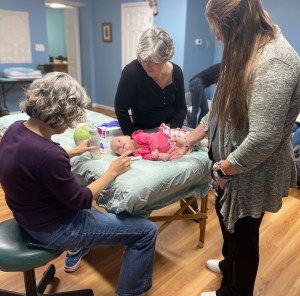
One place we see our clients is called Oasis. Last night definitely seemed to fit the namesake as it was a respite from chaos and allowed dedicated focus on mom and baby under specialized and supportive care.



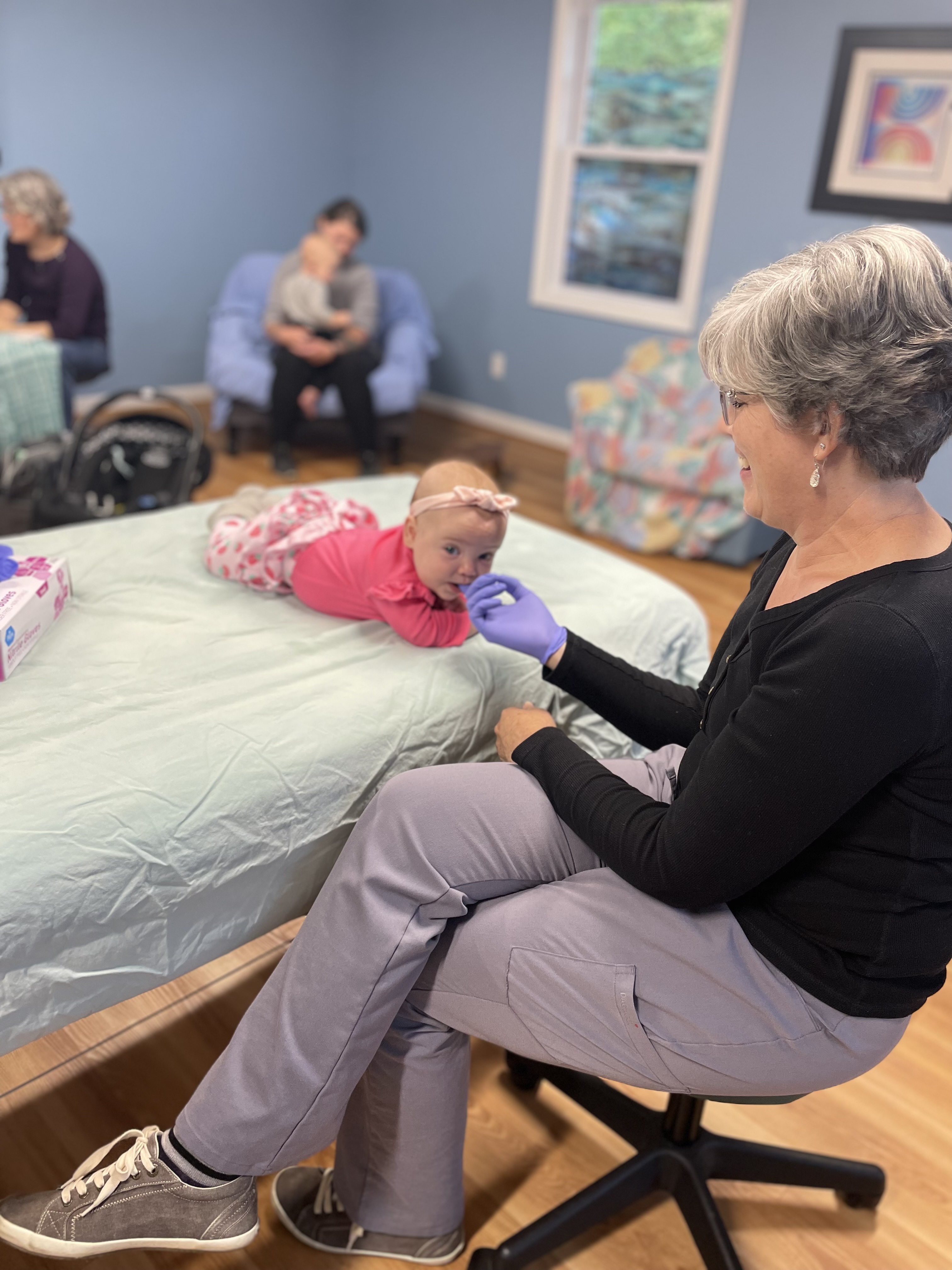
Featured professionals: Elizabeth Stapleton, IBCLC, RN and Ashley Kester, IBCLC, RN with Lactation Care with Elizabeth; Amanda Chastain, MA, CCC-SLP with The Speech Network; Katie Stewart, LMT, RCST, CLC with Integral Integrity.


When Do I Need to Get Help with Breastfeeding?

Assistance from expert IBCLC, Elizabeth Stapleton

PRENATAL:

Whether this will be your first baby and you have questions about how breastfeeding will look, or if you struggled feeding a previous baby, a prenatal visit can set your mind at rest, address your concerns about breastfeeding, and help you make a plan for success. Also, pump choices can be overwhelming, and we can discuss the best options for your situation.

AFTER BIRTH: 

​-you want help with positioning

​-you want to know if your baby is transferring enough milk

​-your milk isn’t in by day 3

​-your baby isn’t having enough wet and dirty diapers; your baby is still having meconium stools at day 5.

​-your nipples are sore, cracked, bleeding, tender, hurting.  (Pain usually means something isn’t right.)

​-someone told you your baby is lazy, has a small mouth, or has a tongue or lip tie.

-you have any questions about lactation and breastfeeding

Plan ahead to achieve your breastfeeding goals when going back to work

LATER ON: 

-you need help planning for back to work

-you feel like your supply has decreased

-your baby won’t take a bottle

-you have questions about transition to solid food

-you are ready to wean, or night wean

-you want to learn about nursing past one year

SCHEDULE now to discuss your questions, concerns and review your goals for your breastfeeding journey. We can assist in any stage of the process and offer lactation support that includes pumping and bottle feeding. Schedule your initial appointment online, starting with a virtual intake appointment here.

Team Effort

At Lactation Care with Elizabeth, we partner with many other providers to help you and your baby move from struggling to surviving to thriving. Some families do great with just an IBCLC, others need to add one additional support, and sometimes we work together to create a team for success.

Your IBCLC will discuss options that will add support to your journey to meeting your breastfeeding goals.

MEET THE PLAYERS

Your baby’s pediatrician: We send them a fax summarizing our visits so they have the latest weight, weighted feed, and current feeding plan.

Your OB or midwife: We send them a fax summarizing our visits so they can support you with medical and emotional needs. We need their input on things like mastitis, low supply, and post-partum depression and anxiety.

Bodyworkers: Birth is hard on both a mama and a baby! A reset and adjustment can get all systems relaxed and functioning well. We love Katie Stewart for cranial sacral therapy, massage, and healing from birth trauma, plus the magic that can happen during combined appointments with both Elizabeth and Katie. Chiropractic is another form of bodywork that is gentle for babies and helps mamas realign after birth. See your favorite bodyworker or check on our resource page for people we have worked with and recommend.

Speech Therapy: Some babies need a little extra help learning how to use their mouths properly. The SLPs at The Speech Network specialize in infant oral-motor therapy and can move your baby to the next level of function for correct breast and bottle feeding.

Occupational Therapy: OTs help with overall regulation, tension patterns, baby massage, tummytime, and can support overcoming breast and bottle feeding challenges as well as transition to solids.

Dentists specializing in pediatric oral tie releases: If we assess your baby and find that they are struggling to feed because of restricted oral tissue, we will refer you to a dentist for diagnosis and treatment. We have providers we trust to provide excellent care and will discuss options with you. The Kentucky Tongue and Lip Tie Support Group on Facebook is a good resource as well.

Doulas: Doulas are not just for birth! Post Partum Doulas can provide in-home support as you transition into your new parenting role. Sometimes a good night of sleep helps everyone!

Pelvic Floor Therapists: Not only do these amazing therapists help with pelvic floor health, which affects your overall comfort and well-being, but some also provide breast ultrasound therapy to break up clogs and mastitis.

The old adage is true – it takes a village! It can seem overwhelming, but we can discuss goals and help create your team to support you in meeting your breastfeeding goals!

Cookies with your milk?

Ingredients are everything! Check out this recipe,
recommended by my clients:
https://www.howsweeteats.com/2015/02/lactation-cookies/

When my sister was about to deliver her first baby, I made a big batch of lactation cookies to take to her. They were yummy and my boys ate them up before I could get them to my sister. (I made another batch and kept the boys well away!) Lactation cookies are a great way to nurture your friends and family, but do they really help increase milk production?

Elizabeth’s take on lactation cookies, shared previously on another blog.

​The best way to maximize milk production is early, frequent, and effective emptying of the breasts.  All the cookies in the world won’t change getting a good start or make up for underlying physical or hormonal challenges.  Seeing an IBCLC early in the breastfeeding journey can help determine what might be causing problems, so don’t delay getting professional help! 

Cookies can be a part of supporting milk production by boosting calories, adding beneficial and nutritious ingredients, and supporting happy hormones- feeling loved and supported allows the oxytocin to flow and thus the milk can flow as well. Calories, nutrition, and love can all be provided in other ways, but sometimes there is nothing like a cookie for a post lunch treat or afternoon boost!

Besides adding some needed calories (500 kcal more than pre-pregnancy), the ingredients in lactation cookies can support overall nutritional status and thus milk production. A few of the ingredients common in lactation cookies are considered lactogenic and may help increase supply:

• Coconut oil: healthy fats can increase the fat in milk

• Seeds: contain tryptophan that helps produce serotonin that can help produce prolactin• Nuts: contain minerals, good oils, and tryptophan.

• Flaxseed: relieves constipation, is lactogenic

• Oats: contain tryptophan, saponins (hormone precursors), phytoestrogens, beta-glucan (increases prolactin)

• Nutritional yeast: contains b vitamins , protein, and phytoestrogen.

(reference: Motherfood by Hilary Jacobson)

Snuggle up skin to skin with your baby and eat some cookies! As part of a balanced (or as balanced as you can as a new parent) diet and good hydration, lactation cookies can help support milk production, make up for some calorie deficits, and make you happy!

Happy Eating!

-Elizabeth